When the Safety Net Shrinks, Community Steps In
SNAP Changes and Star Farm’s Model of Food Justice

Over the past year, Illinois families relying on SNAP have felt the ground shift beneath them. The end of pandemic-era emergency allotments, coupled with stricter eligibility reviews and rising food prices, has meant many households are receiving significantly less support—sometimes hundreds of dollars less per month—at a time when groceries cost more than ever. For communities already navigating layered vulnerabilities, these changes aren’t abstract policy adjustments. They show up as skipped meals, harder choices, and fewer margins for error.
In Back of the Yards, one neighborhood grocer is responding not by waiting for policy to catch up, but by building systems of care that meet people where they are.
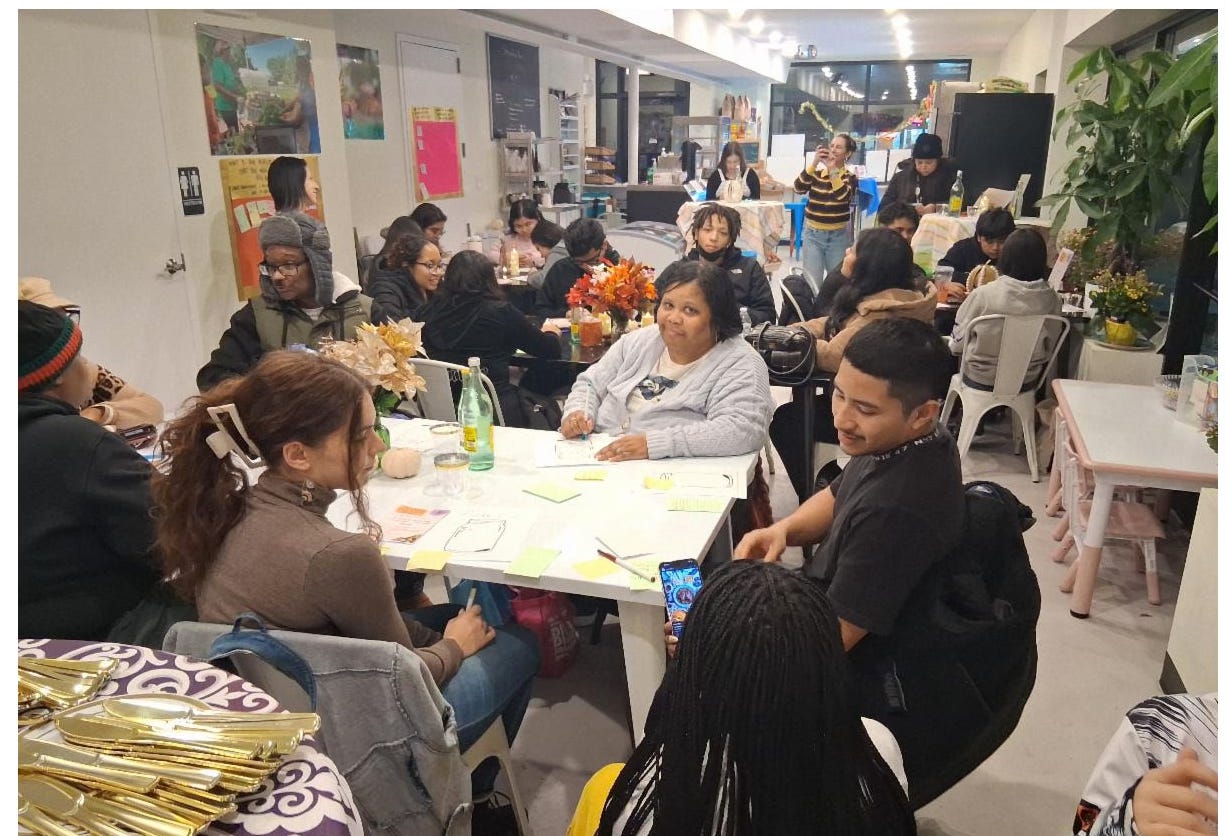
Star Farm Nov Community Dinner. Yes, that’s me.
Free Grocery Delivery as Access, Not Luxury
At Star Farm’s Fresh Market, free grocery delivery isn’t framed as a convenience; it’s an accessibility tool. Customers can order anything in stock through the store’s website, with a $30 minimum, and have their groceries delivered at no additional cost. Star Farm absorbs the delivery fee through a partnership with DoorDash, ensuring that cost isn’t a barrier.
For some, this service addresses mobility challenges or time constraints. For others, it’s about safety and peace of mind, particularly for community members who may not feel comfortable or secure navigating public spaces right now. As Aysha, the store’s grocery manager, shared, online ordering has increased steadily, reflecting broader consumer trends but also highlighting a deeper truth: access to food increasingly depends on access to delivery. When delivery fees alone can rival the cost of a grocery order, free delivery becomes a meaningful intervention.
Star Farm is also in the process of bringing LINK/EBT online, a move that would further close the gap between affordability and access. While EBT is not yet accepted for online orders, in-person shoppers still receive a powerful incentive: a three-to-one LINK match for fresh produce. Every dollar spent becomes three: an intentional investment in both nutrition and dignity.
More Than a Store: A Place to Be
What sets Star Farm apart isn’t just logistics, it’s presence. Much of the team is local, deeply connected to the neighborhood they serve. That proximity shapes everything from the food on the shelves to the way people are welcomed through the door.
The store offers daily free samples: sometimes a smoothie, sometimes something warm, not as a marketing tactic, but as an invitation. A chance to step inside, get out of the cold, sit down, breathe. Located near a food bank and close to 47th Street, Star Farm has become part of an informal network of survival and care.
And the food itself matters. Nearly all produce comes from the farm itself. Alongside fresh greens are ready-to-go, culturally familiar foods: tamales, soups, staples that reflect what people actually eat. Food insecurity isn’t just about calories; it’s about choice, familiarity, and respect.
Imagining Food Justice Beyond Survival
When community members were asked what food justice could look like in Back of the Yards, the answer wasn’t abstract. It was practical and rooted in connection: a food system without class barriers, where affordability doesn’t dictate choice, and where programs speak to one another instead of operating in silos.
Star Farm’s Friday after-school snack program is one great example of this: free food for students, paired with space to do homework. It’s not a replacement for school meals, but a complement. A recognition that hunger doesn’t follow institutional schedules, and that justice looks like continuity.
Policy Gaps, Community Pressure
The recent reduction in SNAP benefits has made Star Farm’s work difficult, but more necessary than ever. While nonprofits and mutual aid groups have stepped in to fill federal gaps, the absence of robust local supplementation is felt daily. Add to that the climate of fear created by heightened immigration enforcement and insufficient city-level protection, and you see a situation where even accessing food can feel risky.
These pressures don’t just affect shoppers; they affect trust, participation, and visibility. And yet, Star Farm remains open, consistent, and committed.
A Ground-Up Vision
From behind the register, real change is visible—but it’s coming from the ground up. From people who believe that no one should go hungry, and who are willing to build the infrastructure to make that belief real.
Food justice, as it looks here, isn’t a single program or policy win. It’s neighbors taking care of each other. It’s free delivery, matched benefits, after-school snacks, cooking classes, and community dinners. It’s showing up—and staying.
As SNAP continues to shrink, the question isn’t whether community-based solutions are necessary. It’s whether we’re willing to support and scale the ones that already work.