Echos of Concrete
A Sensory Walkthrough of the Damen Grain Silos

The first time I stood beneath the Damen Silos, I felt small in a way that was different from being in downtown Chicago, craning my neck to take in mirrored glass and steel. These silos are hulking, gray sentinels—weathered and worn, yet somehow still defiant—standing at the edge of the South Branch of the Chicago River like they’re waiting for something. Their story isn’t one of polish, but of grit. You can hear it in the wind that whistles through their broken windows and smell it in the rust and dust that cling to them.
Built in 1906, the Damen Grain Silos were once the center of a thriving industrial ecosystem. Chicago was the grain capital of the world at the time—a hub where railroads, waterways, and stockyards converged in a frenzy of commerce. The silos were constructed by the Topeka & Santa Fe Railroad, an architectural feat of reinforced concrete designed to hold tens of thousands of bushels of grain. Back then, it would’ve been loud—steam trains shrieking, machinery clanging, and grain spilling in golden waves that hissed into waiting containers.
The silos are silent now.
Or, maybe not silent. They echo. You notice that when you wander through them (or rather when people used to—before they were officially closed to the curious). Your own footsteps come back at you, disoriented and hollow. The air inside is thick with history. You can feel it on your skin—the cool dampness of shadowed concrete and the dry grit of dust kicked up with every step.
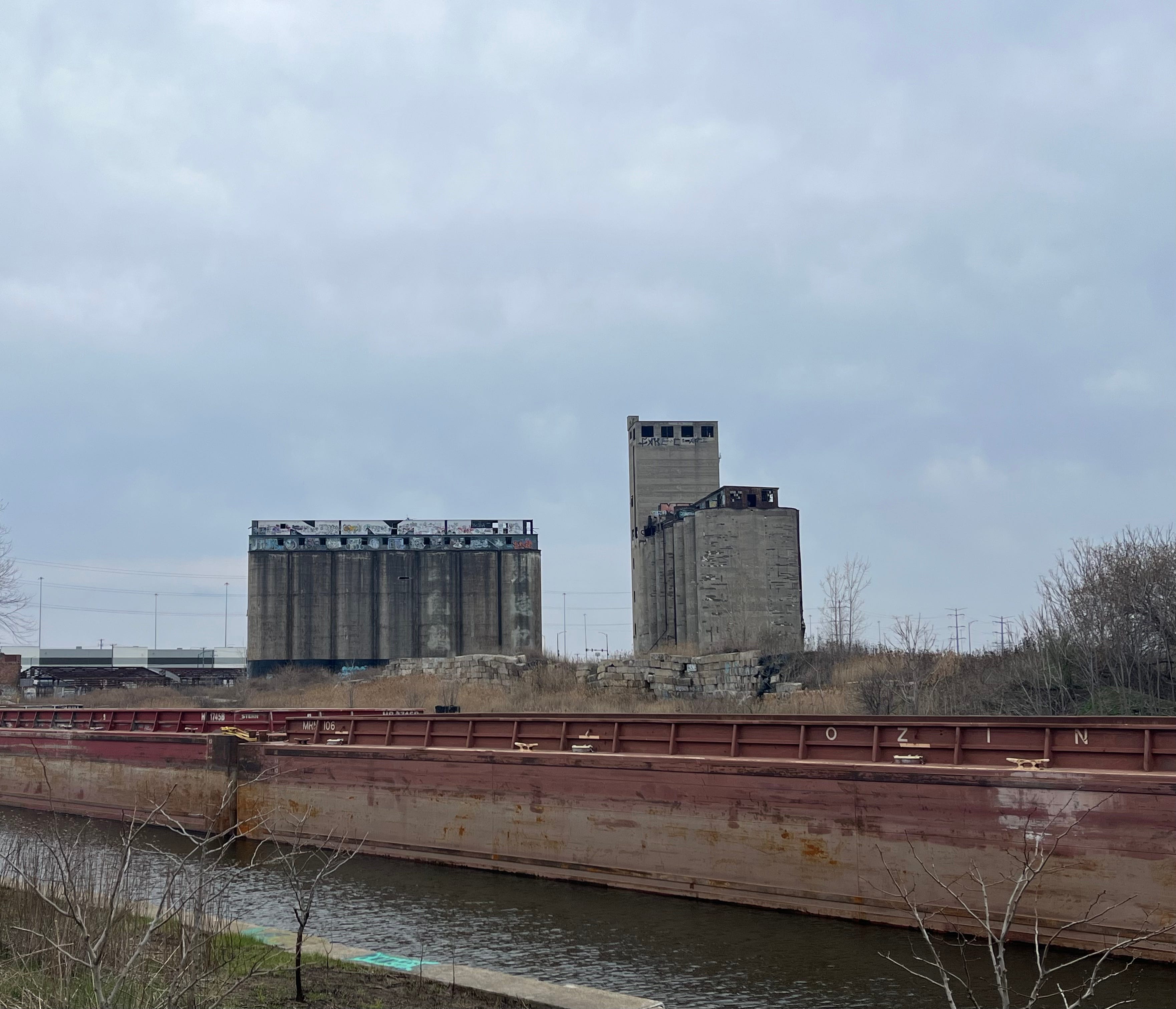
After an explosion in 1977, the silos officially fell into disuse, becomming state-owned. That’s when the site transformed into something else entirely—less a tool of production and more a canvas, a playground, a ruin. Urban explorers broke in, leaving behind graffiti in every hue—swirling blues and electric reds scrawled over the gray-like veins of color pulsing through old bones. The smell inside shifted too—less grain and grease, more mildew and moss, mixed with the ever-present scent of the river nearby: murky, metallic, alive.
In the 2000s, the city began to ask questions: What do we do with the Damen Silos? Developers circled, ideas floated. Demolish them. Redevelop the site. Turn it into a park. Let it rot. People have strong feelings about places like this. Maybe it’s the way these structures absorb the past, becoming monuments to a time that’s hard to recapture but easy to imagine. You touch the pitted walls and feel both the permanence and the decay. It’s humbling; reminding us we’re more than the times we’re living in.
In 2022, the state sold the site to MAT Limited Partnership, owned by the same family that operates MAT Asphalt, a hazardous facility in the McKinley Park neighborhood for $6.52 million. It was a move that sparked public concern. Would the silos be razed? Paved over for more industry? These threats hung uneasily in the air until late 2024, when the Army Corps of Engineers approved the demolition of the site.
I think about what will be lost when the Damen Silos disappear. Not just the structure, but the way they feel. The way they hold sound and shadow. The way the river laps at their base, the same river that carried barges of grain a century ago. The taste of rust on the air. The sting of wind off the concrete. The faint sweetness of decay in the summer heat.
Chicago is a city that sometimes forgets to mourn its ghosts before tearing them down. But the silos—massive, monolithic, and strangely graceful—ask us to pause. To listen. To smell and see and touch and remember.
Because history isn’t always something you read. Sometimes, it’s something you walk through. Something you feel.